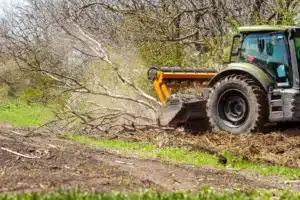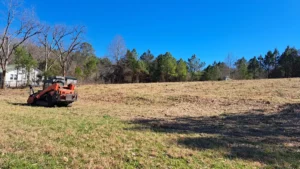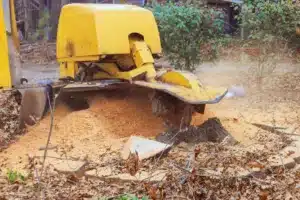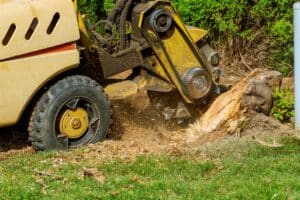
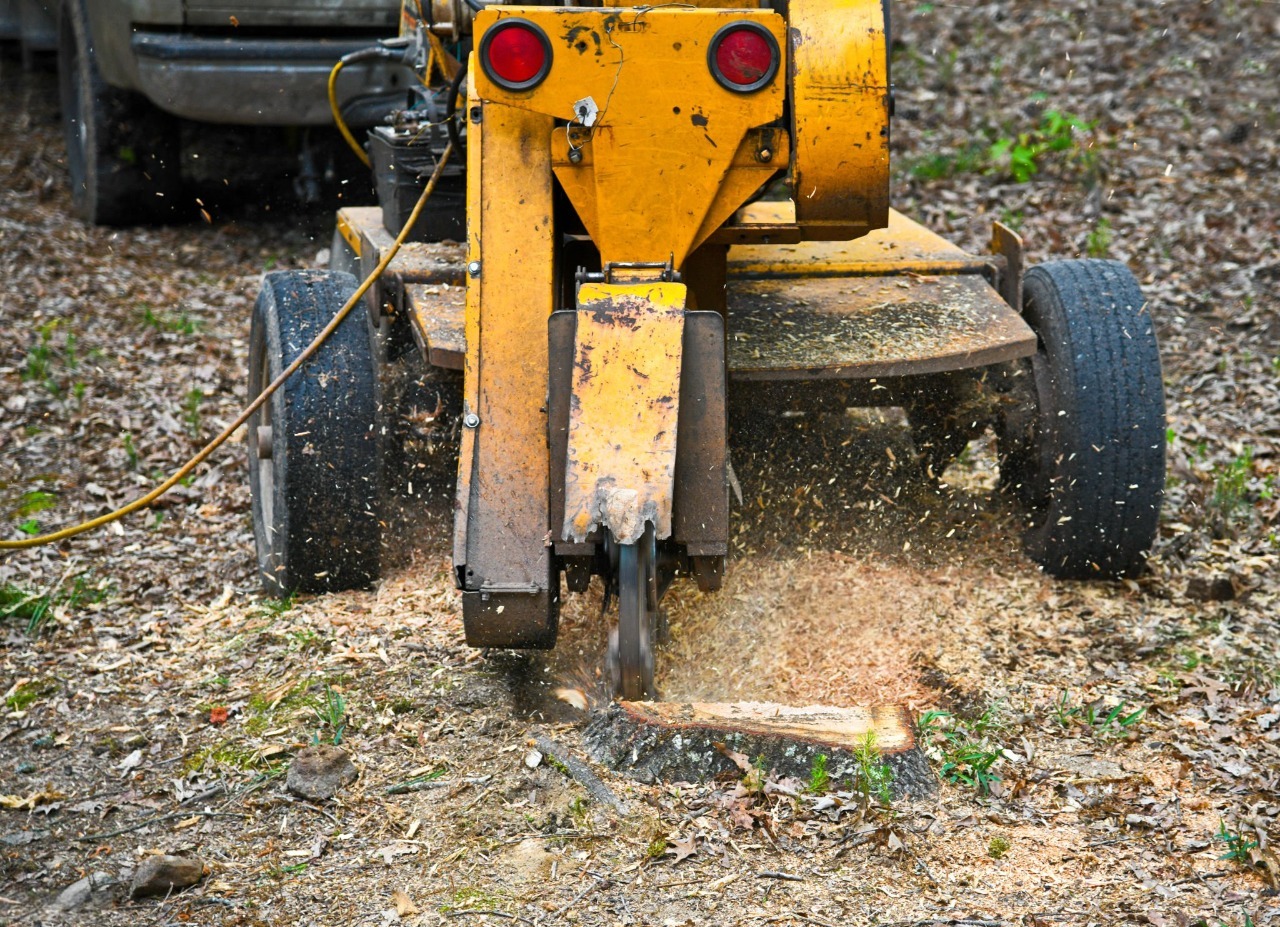
Tree stump grinding is the process of using a rotating cutting wheel to shred a leftover stump below ground level, leaving the area flat, clean, and ready for whatever comes next. For most homeowners in Fort Payne and across DeKalb County, it’s the fastest, most practical way to deal with a stump after a tree comes down.
If you want the full picture on how stump grinding works from start to finish, our complete guide to stump grinding covers the process, equipment, and what to expect on the day of the job. This post focuses on the homeowner side of things — why stumps are a bigger problem than most people realize, what your options are, and what separates a job done right from one that creates new headaches down the road.\
Why Leaving a Stump Isn’t a Neutral Choice
A lot of homeowners treat a leftover stump as a low-priority item. The tree is gone, the yard looks mostly fine, and dealing with the stump feels optional. That thinking tends to change after a season or two.
Stumps don’t just sit there. In northeast Alabama’s warm, humid climate, a decaying stump becomes an active problem fairly quickly. Penn State Extension’s research on wood decay shows that decay fungi release enzymes that break wood down from the inside, and that the process needs three things Alabama supplies most of the year: moisture, oxygen, and temperatures between 68 and 90 degrees. That same decay process is what attracts pests.
Termites, carpenter ants, and bark beetles are all drawn to rotting wood. Northeast Alabama’s climate keeps termites active nearly year-round, and Alabama Cooperative Extension’s termite guidance specifically lists removing tree stumps and wood debris as a prevention step for homeowners. A stump sitting in a backyard near Rainsville or Henagar gives a colony exactly what it looks for: a damp, decaying food source close to a structure.
Did You Know? Sweetgum and red maple — two of the most common stumps we grind across Sand Mountain — are also among the most aggressive resprouters. If the stump isn’t ground below the root flare, new shoots can push up within a single growing season, sometimes dozens of them from a single root system.
Beyond pests and regrowth, there are practical day-to-day problems. A low stump hidden by summer grass is a genuine tripping hazard, especially for kids and visitors who don’t know it’s there. Mower blades that hit a buried stump can be damaged or thrown, and stump-to-mower contact is one of the more common causes of mowing injuries. These aren’t rare edge cases — we hear about them regularly from homeowners who waited longer than they should have.
Tree Stump Grinding vs. Full Stump Removal
When homeowners start researching their options, they often come across both “stump grinding” and “stump removal” and aren’t sure which one they actually need.
Stump grinding shreds the visible stump and surface roots below grade, leaving the deeper root system in the ground to decay naturally over the following months and years. It’s faster, less disruptive to the surrounding yard, and far less expensive than full removal.
Full stump removal digs out the entire root ball — every lateral root and the taproot — leaving a large hole that needs to be filled and graded. It’s rarely necessary for residential jobs. The main cases where full removal makes sense are deep foundation work or a construction project that requires a completely clear subsurface.
For most Fort Payne homeowners dealing with a yard stump, grinding is the right call. The remaining roots decay on their own, they don’t interfere with mowing or light landscaping, and the process leaves the surface level and ready for grass seed or sod within a few weeks.
Pro Tip: If you plan to plant a new tree in the same spot, let the crew know before the job starts. They can adjust grind depth and root coverage to give new plantings the best chance without the old root system competing for space.
What the Grinding Process Looks Like From Your Side of the Yard
Most homeowners have never watched a stump grinder work. Here’s what a typical job looks like from the time the crew arrives to when they leave.
The first step is always a walkthrough. We look at the stump size, check for surface roots that extend beyond the obvious footprint, confirm there are no utility lines nearby, and talk through what you want done with the wood chips afterward. That five-minute conversation prevents most of the surprises that come up mid-job.
Once the grinder is positioned, the cutting wheel works across the stump in overlapping passes, moving down in increments until the stump is ground four to twelve inches below grade depending on what you’re planning to do with the space. Surface roots within the immediate area get worked in the same pass.
The result is a pile of wood chips and loose soil. We can spread those chips to fill the hole — they compact down and make reasonable fill material for spots you plan to reseed — or haul them off entirely if you’d rather start clean. Either way, the area gets leveled before we leave.
Did You Know? The grinding process itself is loud but quick. A single residential stump usually takes 30 minutes to an hour with commercial equipment. The prep and cleanup on either side typically add another 30 minutes to the job total.
The Fort Payne Factors That Change the Job
Northeast Alabama isn’t the same as grinding stumps in flat, sandy-soil country. A few local realities consistently affect how jobs play out here.
Our clay-heavy soil holds moisture, which keeps root systems dense and firm longer than in lighter soils. That’s good for the trees while they’re alive, but it means older stumps here don’t soften as quickly as homeowners might expect. A stump that looks weathered on top can still be surprisingly solid underneath.
Terrain is another factor. Many DeKalb County properties have grade changes, rock outcroppings, or limited equipment access that affect how a crew can approach a job. Stumps on steep slopes or behind structures take longer and may require a compact track grinder rather than a wheeled unit. This is part of why an on-site assessment matters — a photo and a measurement can’t capture access constraints the way a site visit can.
We also see a lot of multi-trunk situations, especially with water oaks and sweetgums that split low on the trunk. What looks like one stump from a distance is often two or three root masses growing from a shared root system just beneath the surface. Our stump grinding services page covers the full range of residential and agricultural stump work we handle across the service area.
What Happens After the Job
The area around a freshly ground stump will be loose for a week or two as the wood chip fill settles. That’s normal. For spots you plan to reseed, wait two to three weeks before laying seed or sod so the soil has time to compact. A light topdressing of clean topsoil over the chips speeds that process up.
For spots near a driveway or hardscape, keep an eye on the surface for the first month. Clay soil moves as wood chips break down underneath, and occasionally a small depression develops that needs a second fill pass. We tell every homeowner to call us if that happens — it’s an easy fix and part of making sure the job is actually finished.
If you’re planning to clear more than a few stumps — or if the stumps are part of a larger land project — bundling stump grinding with land clearing services usually reduces the overall cost and gets everything finished in one visit.
Frequently Asked Questions
What’s the difference between tree stump grinding and stump removal?
Grinding shreds the stump below grade and leaves the deep roots to decay naturally — it’s faster, cheaper, and less disruptive to the surrounding yard. Full stump removal digs out the entire root ball, which is only necessary for deep construction work. Most residential jobs in Fort Payne are grinding jobs, not removal jobs.
Will the roots cause problems after grinding?
In most cases, no. The remaining roots decay gradually and don’t interfere with mowing, light landscaping, or re-seeding. Larger roots from old hardwoods take longer to break down but don’t typically cause surface problems. Planting directly over old roots requires more time and fill, so let your contractor know your plans before the job starts.
How soon can I plant grass after stump grinding?
Wait two to three weeks for the fill to settle before seeding. Adding a thin layer of topsoil over the wood chips gives grass seed better contact with soil and speeds up germination. Laying sod can happen slightly sooner since it doesn’t need to germinate through the chips.
Is tree stump grinding safe near a fence or structure?
Yes, when done by an experienced crew with the right equipment. Compact track grinders can work in tighter spaces than wheeled units, and an experienced operator controls the cutter path carefully around structures. The main concern is surface root coverage — roots that extend under a fence line need to be addressed to prevent regrowth.
How do I know if I need one grind or multiple?
Measure the stump at its widest point at ground level, then look for any surface roots extending outward that are two inches or more in diameter. Each major root cluster may need its own grind pass. When you call for a quote, describe what you can see — or better yet, let us do a free on-site assessment so nothing gets missed.
Ready to get rid of a stump that’s been sitting too long? Contact Meeks Land Management for a free on-site quote in Fort Payne, Rainsville, Fyffe, Valley Head, or anywhere across DeKalb County. Call us at (256) 979-9520 or submit the quote form online.