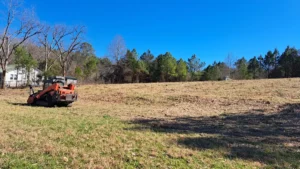
If you plan to build, improve access, expand a pasture, or reclaim an overgrown part of your property, fall is often a useful time to plan land clearing in North Alabama. The best winter plan is not simply “clear everything before the first freeze.” It is a site-specific sequence that accounts for access, drainage, soil conditions, the work you want to do next, and how exposed ground will be protected after clearing.
Why plan land clearing before winter?
Winter land clearing can give property owners a head start on spring projects. Clearing ahead of time may leave room to review the site, let the ground settle where appropriate, and schedule follow-up work before construction or planting begins. It can also make it easier to see the shape of a property when leaves are down.
That does not mean every property should be cleared as soon as possible. North Alabama sites can include steep slopes, heavy clay, wet areas, rocky ground, and narrow access points. Equipment work on saturated soil can create ruts and compaction. Alabama Cooperative Extension notes that operating equipment in saturated soils can harm soil structure and water infiltration. The right schedule depends on the site, not the calendar alone.
Did You Know? Clearing is only one part of site preparation. The next use of the property should shape the clearing limits, finish grade, access route, and debris plan.
Match the timing to the next project
A future home site, driveway, pasture, hunting area, fence line, and general cleanup each need a different plan. A building area may need a more open pad and additional grading. A trail may need selective clearing that keeps useful trees and natural drainage in place. A pasture opening may need a follow-up seeding or soil plan.
Write down what you want the property to do after clearing. That simple step helps a contractor separate vegetation that must go from trees, buffers, or ground cover that should remain.
Do not force equipment onto wet ground
A short dry window can be more useful than a cold week with steady rain. If the soil is soft, heavy equipment may leave deep tracks and disturb more ground than the project requires. A site visit can help identify firm access routes, wet areas, slopes, and places that need extra protection before work begins.
Four steps to prepare a property for winter clearing
1. Mark the work area and what stays
Walk the property before the estimate. Mark the proposed building area, driveway, fence lines, trails, septic area, utility features, streams, and trees you want to keep. If the clearing limits are unclear, equipment may remove vegetation that would have helped with privacy, shade, drainage, or erosion control.
Alabama’s forestry best-management-practice guidance recommends planning before work begins and protecting streamside management zones and other sensitive areas. The Alabama Forestry Commission’s Best Management Practices for Forestry is a useful reference for property owners who want to understand why those areas matter.
2. Plan access before the machines arrive
Equipment needs a safe way onto the property and enough room to work. A narrow entrance, steep drive, soft shoulder, or low branch can change the project plan. Tell the contractor where trucks can travel, where materials can be staged, and which areas should not be crossed.
The access plan should also account for the next phase. If you plan a driveway or culvert, the clearing route should not create a new drainage problem. Meeks Land Management’s driveway culvert service is a related option when property access needs more than brush removal.
Pro Tip: Take photos from the entrance, the work area, and each side of the property before the visit. Include gates, slopes, standing water, fences, and overhead obstacles. These details make the first scope discussion more useful.
3. Decide how the material will be handled
Cleared material can be chipped, mulched, stacked, hauled away, or left in an approved area, depending on the project and the property. Ask what happens to trees, brush, stumps, and large logs before work begins. A debris plan affects the time, equipment, access, and final appearance of the site.
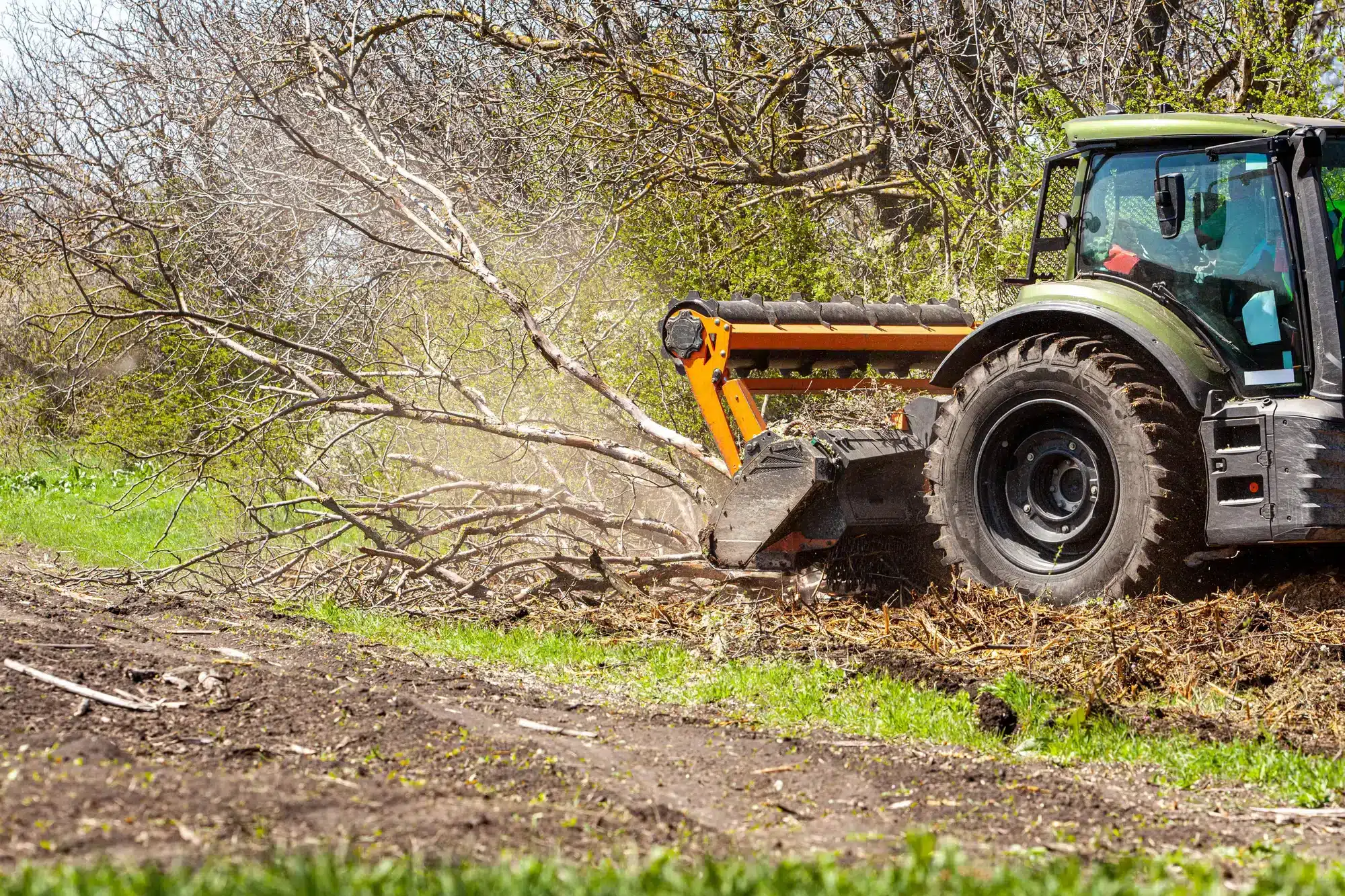
Forestry mulching may fit a property with dense brush and smaller trees where the goal is to leave an even layer of mulch in place. It is not the answer for every site. Large timber, construction pads, stump removal, drainage work, and hauling needs may call for a different mix of services. Learn more about forestry mulching in North Alabama before choosing a method based on a short description alone.
4. Protect bare soil after clearing
A cleared area can be more vulnerable to runoff, especially on slopes or near drainage paths. The goal is to avoid leaving disturbed ground unprotected while waiting for the next phase of work. Mulch, temporary cover, preserved vegetation, diversion, or other controls may be appropriate depending on the site.
The EPA’s stormwater pollution prevention guidance explains the basic principle: limit disturbed ground, keep clean water away from exposed soil, and stabilize bare areas as soon as practical. For a North Alabama property, the contractor and project owner should also account for local drainage, slope, soil, and permit requirements.
What to ask before scheduling the work
A useful land-clearing estimate should answer more than “How much per acre?” Ask these questions before the equipment arrives:
- What exact area will be cleared?
- Which trees, buffers, fences, utilities, or features will remain?
- How will the crew reach the work area?
- Will stumps be ground, dug, or left for a later phase?
- Will mulch remain on site, or will debris be removed?
- What happens if the soil is too wet for safe access?
- How will exposed soil and drainage paths be protected?
- What should be ready before the crew arrives?
The answers can change the scope and price. A smaller, well-defined clearing area may be more useful than clearing an entire parcel without a clear next step.
Did You Know? Two properties with the same acreage can need very different clearing plans. Vegetation density, slope, access, stump size, drainage, and debris handling can matter more than the acreage number by itself.
When to call Meeks Land Management
If you are planning winter land clearing in Fort Payne, DeKalb County, or the surrounding North Alabama service area, start with a site-specific conversation. Share your intended use, access concerns, areas to preserve, and preferred timeline. Meeks Land Management provides land clearing services in Fort Payne and surrounding communities and can help identify the work needed for the next phase of your property plan.
Ready to prepare your property before winter? Request a free estimate from Meeks Land Management or contact the team with the property location, project goal, and any access or drainage details you already know.
Frequently Asked Questions
Is winter a good time for land clearing in North Alabama?
Winter can be a useful planning and work window, but it is not automatically the best time for every property. Soil moisture, access, slopes, drainage, vegetation, and the next project should guide the schedule.
Should I clear my entire property before winter?
Usually, no. Clear the area needed for the next phase and preserve useful vegetation, buffers, and natural drainage where the plan allows. A site review can help define a practical clearing limit.
What happens to trees and brush after land clearing?
The material may be mulched, chipped, stacked, hauled away, or handled through another agreed plan. Ask about debris handling in the estimate because it can change the equipment, time, and finished condition of the property.
How can I protect my property after clearing?
Limit the disturbed area, keep runoff from crossing exposed soil, and stabilize bare ground as soon as practical. The right approach depends on slope, soil, drainage, weather, and the next stage of work.