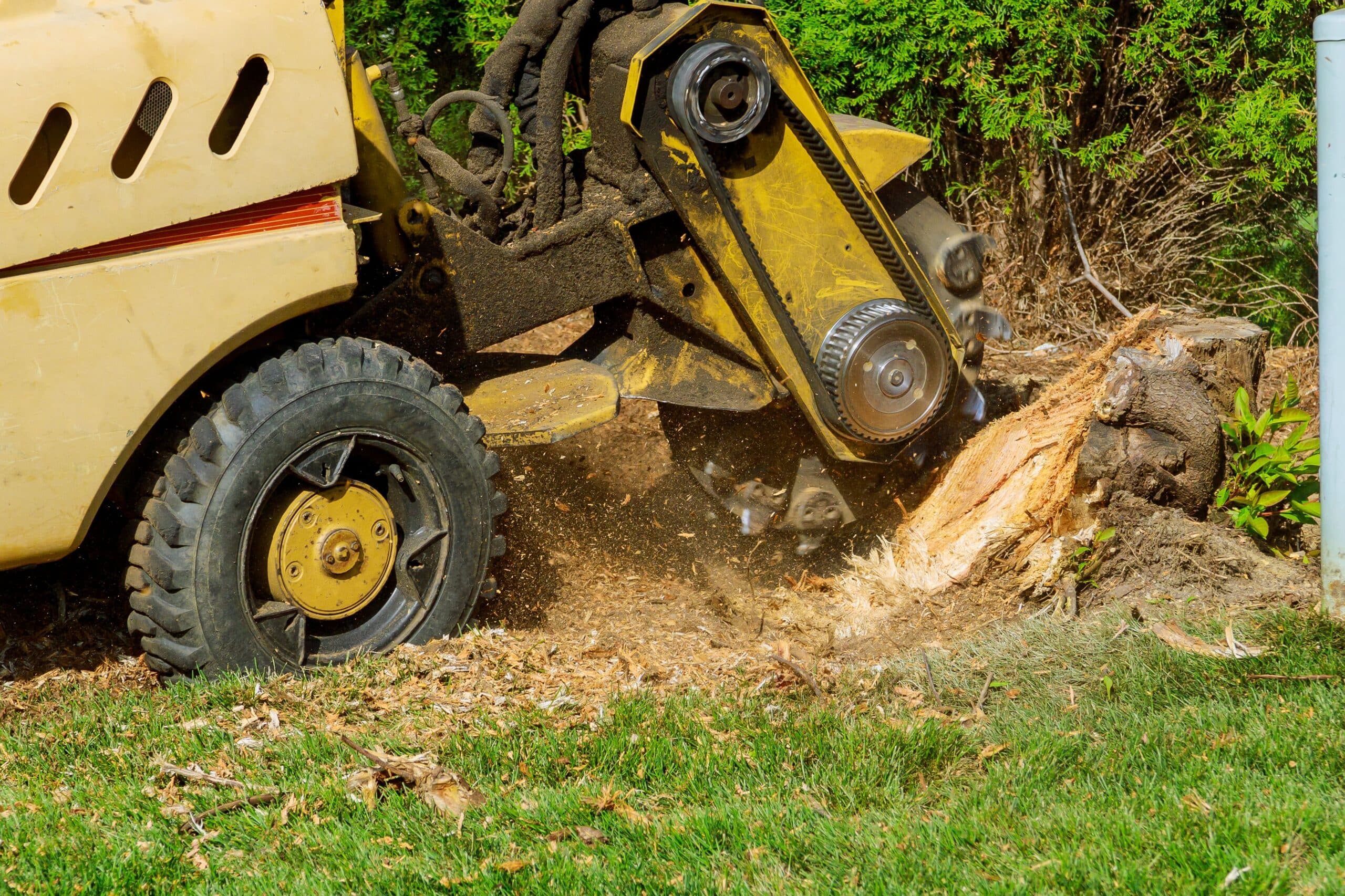
If you have a tree stump sitting in your yard, stump grinding is the fastest way to get rid of it. A professional grinder chews the stump down to several inches below the surface, leaving the area level and ready for grass, mulch, or a new project. Most jobs in Fort Payne take just a few hours.
Stumps are not just an eyesore. They attract termites and carpenter ants, trip up kids and pets, and make mowing a hassle. In a place like DeKalb County, where clay soil and heavy rain are part of life, an old stump can sit there for years doing nothing but causing problems. Stump grinding is usually the final step after a tree comes down, and it pairs naturally with broader land clearing services when a property needs more than one stump handled at a time.
This guide walks through how stump grinding works, what it costs, and what our crew sees on a typical Fort Payne property. We’ll also cover what most homeowners get wrong before calling a pro.
What Is Stump Grinding?
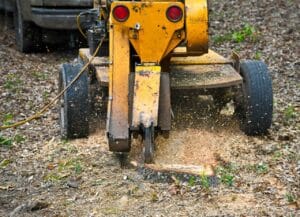
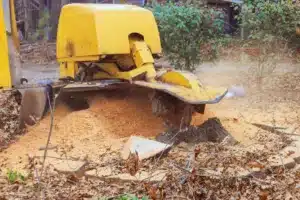
Stump grinding uses a machine with a spinning cutting wheel to chew a tree stump down into wood chips. The wheel grinds the stump and any large surface roots below ground level, usually four to twelve inches deep depending on what you need.
Did You Know? A standard stump grinder can shred a medium-sized stump in under 30 minutes. Larger stumps with thick root systems, like old oaks or sweetgums, can take an hour or more.
This is different from full stump removal, which digs the entire root ball out of the ground. Grinding is faster, cheaper, and leaves your yard in much better shape. Removal is sometimes needed for construction projects, but grinding handles most residential and farm situations just fine. You can see the full breakdown of what’s included on our stump grinding services page.
How the Stump Grinding Process Works
Every stump grinding job follows roughly the same steps, whether it’s one stump in a backyard or a dozen stumps on a cleared lot.
- Site visit and quote. We look at the stump’s size, location, and any nearby obstacles like fences, septic lines, or driveways.
- Equipment setup. The crew positions the grinder and checks for safety clearance around the work area.
- Grinding. The machine works the stump down below grade, breaking up surface roots as it goes.
- Cleanup and fill. Wood chips get spread to fill the hole, or hauled off if you’d rather have bare soil.
Pro Tip: Ask your contractor upfront whether chip removal and hole-filling are included in the quote. Some companies charge extra for these steps, and it’s a common surprise on the final bill.
What Happens Right After Grinding
The ground around a fresh grind is loose and a little uneven for the first week or two. We tamp it down and add fill where needed, but settling is normal. If you plan to lay sod or plant grass seed, wait at least a few weeks so the soil has time to settle properly.
What Stump Grinding Costs in Fort Payne
Pricing depends mostly on stump diameter, wood density, and how many stumps you’re grinding. Most local jobs fall into a few general ranges.
| Stump Size (diameter) | Typical Cost Range |
| Small (under 12 inches) | $75–$150 per stump |
| Medium (12–24 inches) | $150–$350 per stump |
| Large (over 24 inches) | $350+ per stump |
Hard woods like oak and hickory take longer to grind than soft woods like pine, which can push the price up. Stumps near fences, septic systems, or underground lines also take more time and care, which factors into the quote.
Did You Know? Many companies, including ours, offer a discount when you bundle several stumps into one visit. If you’ve got more than one stump on your property, mention all of them when you call for a quote.
We’re currently offering $500 off select land management projects this month. It’s worth asking about when you request a free quote.
Why Local Soil and Tree Species Matter
Northeast Alabama presents a few specific challenges that homeowners in other regions don’t deal with as much. Our clay-heavy soil holds water, which means roots stay damp and decay slower on their own. That’s actually one of the better reasons to grind rather than wait for nature to take its course.
We also see a lot of sweetgum and maple stumps that sprout new shoots from the roots months after the tree was cut down. Grinding the stump down deep enough stops this regrowth at the source, something cutting the trunk alone won’t fix.
A Recent Job: What We Found Under One Fort Payne Stump
On a recent property near Rainsville, a homeowner asked us to grind a stump they assumed was a single small oak. Once we cleared the leaf litter, we found two stumps growing from intertwined root systems just inches apart, likely from a tree that had split years earlier. We adjusted the grind depth and worked both root masses together rather than charging for two separate jobs. The homeowner ended up with one clean, level patch of yard instead of a lumpy mess. It’s a good reminder that what looks simple from the surface isn’t always simple underground, and it’s part of why an on-site assessment matters more than a phone estimate.
Stump Grinding vs. Letting It Rot Naturally
Some homeowners consider skipping professional grinding and just letting a stump decay over time. According to extension horticulture research from Iowa State University, natural decay can take ten or more years depending on soil moisture, fungus activity, and tree species, which is a long time to have a tripping hazard and pest magnet sitting in your yard.
Drilling holes and adding fertilizer can speed up decay, but even then you’re often looking at one to three years before the stump softens enough to break apart. For most homeowners who want their yard usable now, grinding is simply the faster path.
Pro Tip: If you do decide to leave a stump and let it decay, keep it away from your home’s foundation and any spot you plan to dig or plant soon. Decaying wood underground can shift unpredictably as it breaks down.
What to Do With the Wood Chips
Stump grinding leaves behind a pile of wood chips, and most homeowners aren’t sure what to do with them. The good news is they’re useful. Wood-based mulch is genuinely effective at protecting soil. A large-scale research review found that mulching reduces water runoff and soil loss by roughly half to three-quarters compared to bare ground, which makes leftover chips a smart choice for garden beds or bare patches rather than something to haul straight to the dump.
You can spread the chips around garden beds, use them to fill the hole left by grinding, or have us haul them away if you’d rather start with a clean slate. Either way, don’t let them pile up directly against tree trunks or your home’s siding, since trapped moisture can cause its own problems over time. If water drainage on your property is already a concern, it’s also worth looking at our driveway culvert installation options, since cleared stump areas often shift how water moves across a yard.
Frequently Asked Questions
How much does stump grinding cost in Fort Payne, AL?
Most stumps cost between $75 and $350 depending on size and wood type, with larger or harder stumps costing more. Bundling multiple stumps into one visit usually lowers the per-stump price. A free on-site quote gives you the most accurate number.
Does grinding remove the entire root system?
No, grinding removes the visible stump and surface roots but leaves deeper roots in the ground. Those roots decay naturally over the following months and won’t interfere with mowing or light landscaping. Larger structural roots take longer to break down completely.
How long does a stump grinding job take?
Most single stumps take 30 minutes to an hour to grind, though large or multiple stumps take longer. Cleanup and fill add a bit more time. A typical residential job is finished in a single visit.
Can I plant grass right after stump grinding?
It’s best to wait two to three weeks before seeding so the ground has time to settle. Planting too soon can leave you with an uneven lawn as the fill compacts. Adding topsoil over the chips helps speed up the process.
Is stump grinding safe to do myself with a rented machine?
Rental grinders work, but they’re harder to control and less powerful than commercial equipment, which makes them riskier for anyone without experience. Stumps over 12 inches or near structures, septic lines, or utilities are best left to professionals.
Stump grinding is one of the fastest ways to take back a yard that’s been held hostage by an old tree. The right equipment and a little local know-how turn a hazard into usable space in a matter of hours, not years.